Orthodontist in Lakemoor, Hainesville, McHenry & Round Lake Beach IL
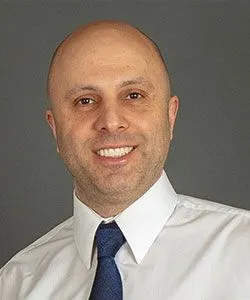
Dr. Sanders is truly blessed to be an orthodontist. Dr. Sanders enjoys working with children, teens, and adults, creating beautiful smiles.
Dr. Sanders was raised in Libertyville, IL attending St. Joseph Catholic School and Carmel Catholic High School in Mundelein. Dr. Sanders was chosen from the Illinois State Senators as Illinois State Scholar. After majoring in Biology/Chemistry from Carroll University of Waukesha. Dr. Sanders went on to dental school of Loyola University of Illinois. Graduating top of his class he was chosen to attend Loyola University Orthodontic program.
Dr. Sanders and his wife, Pat, reside in Lake Forest, Illinois where he raised 7 wonderful children. When not in the office, Dr. Sanders enjoys woodworking, gardening, and time with his favorite Golden, “Flora”. Other hobbies include tennis and his full-time greenhouse.
Dr. Emil Marogil
Orthodontist in Elk Grove Village, IL & Arlington Heights, Il
Dr. Emil Marogil is a native of Illinois. He attended undergraduate school at Loyola University of Chicago where he majored in Biology. He then completed a 2 year certification program at Triton College in Dental Laboratory Technology before heading to the East-coast to attend dental school at Boston University where he received his Doctor of Dental Medicine degree (DMD). He immediately entered the residency program in Orthodontics and Dentofacial Orthopedics at Boston University where he received his Certificate in Advanced Graduate Studies (CAGS) in 2004 and became a licensed and certified Orthodontist. Dr. Emil Marogil is versed in all aspects of Orthodontics and especially enjoys Surgical Orthodontics involving Craniofacial/orthognathic surgery. In his spare time Dr. Marogil enjoys spending time with his family, exercising and traveling.
Dr. Emil Marogil holds the following professional licenses and is a member of the following professional organizations:
Illinois state Orthodontic Specialty Licensure
Illinois state Dental Licensure
Colorado state Dental and Orthodontic Specialty Licensure
American Association of Orthodontists (AAO)
American Dental Association (ADA)
Illinois State Dental Society (ISDS)
Midwestern Society of Orthodontists (MSO)
Chicago Dental Society (CDS)
National and State Drug Enforcement Administration (DEA) certified
"Orthodontics is a very challenging and enjoyable profession that has allowed me to create beautiful and healthy smiles for so many people to enjoy"
Want Straighter Teeth?
What a difference straight teeth can make! A great-looking smile can boost your self-confidence and have a positive impact on social and professional opportunities. Orthodontic treatment is the original smile makeover tool — and you will be happy to know that you're never too old to take advantage of it. But it isn't all about looks: Properly aligned teeth help you to bite, chew and even speak more effectively. They are also easier to clean, which helps keep your mouth free of tooth decay and gum disease.
The amazing thing about orthodontics is that it harnesses the body's natural ability to remodel its own tissue. With the application of light, constant force, orthodontic appliances gently reshape bone and move teeth into better positions. Some examples of these appliances are traditional metal braces, inconspicuous clear or tooth-colored braces, and clear aligners, a relatively new option for adults and teens.
Bite Problems and How to Fix Them
Orthodontic treatment can resolve a number of bite problems, which often become evident by around age 7. These include underbite, crossbite or excessive overbite, where upper and lower teeth don't close in the proper position; open bite, where a space remains between top and bottom teeth when the jaws are closed; and crowding or excessive spacing, where teeth are spaced too close together or too far apart.
To correct bite problems, teeth need to be moved — but doing that isn't as hard as you might think! Teeth aren't fixed rigidly in their supporting bone; instead, they're held in place by a hammock-like structure called the periodontal ligament, which is very responsive to forces placed on the teeth. Orthodontic appliances move teeth by careful application of light, constant pressure. This force can be applied via metal wires that run through small brackets attached to the teeth (braces), or via the semi-rigid plastic of clear aligners.
Orthodontics is for Children — and Adults
Having orthodontic treatment in childhood is ideal in order to take advantage of a youngster's natural growth processes to help move the teeth into proper alignment. Like the rest of the body, the teeth and jaws are now changing rapidly. So at this time it's possible (for example) to create more room for teeth in a crowded mouth by using a “ palatal expander ” to rapidly widen the upper jaw. This phase of growth modification can shorten overall treatment time and ensure the best result if additional orthodontic appliances are needed.
But remember, healthy teeth can be moved at any age, so you've never “missed the boat” for orthodontic treatment. In fact, about one in five of today's orthodontic patients is an adult. Several new technological developments — including tooth-colored ceramic braces, clear aligners and invisible lingual braces — have made orthodontic appliances less evident, and enhanced the treatment experience for grown-ups. Before treatment, adults are carefully examined for signs of periodontal (gum) disease, which will be brought under control before treatment begins.
Types of Orthodontic Appliances
When you imagine someone wearing braces, you probably picture small metal brackets bonded to the front of the teeth, with a thin wire running through them. This time-tested style remains very popular — but it's no longer the only option. Clear braces use brackets made of ceramic or plastic which, except for the slim archwire, are hardly visible. Lingual braces are just like traditional metal braces — except they're bonded to the back of your teeth (the tongue side) so that no one can see them.
Removable clear aligners are an alternative to fixed orthodontic appliances. They consist of a series of clear plastic “trays” that fit over your teeth exactly; each one moves your teeth a little bit, until they are in the proper position. Whether fixed or removable, each type of appliance may have advantages or disadvantages in particular situations. After a complete examination, the best treatment options for you will be discussed.
Types of Braces
There are a few different styles of braces, and the type that your child needs will definitely impact the total cost for treatment. The average cost for a child will vary depending on the style selected and the treatment being perform. Some style braces, like ceramic or invisible aligners are more difficult to see, hence the procedure may take longer.
Metal Braces - Metal is the oldest and most traditional type of braces that people get. Of all the various styles, metal are the least expensive. Traditional braces are also the most apparent, hence children are typically not the biggest fan of them.
Ceramic Braces - Utilize ceramic material to properly align teeth. They are much less noticeable than metal but not entirely invisible. Although they remain a popular option, ceramic may take longer to work than metal and the overall cost may be higher.
Invisible Aligners -Invisible aligners, such as Invisalign, are currently the most appealing visual option. The clear aligners utilize a series of molds that gradually shift teeth into position over time. Invisalign are typically the more expensive option for treatment. This form of treatment is usually reserved for adults paying for their own treatment that are worried about the aesthetic appearance of metal in their mouth.
Damon Braces - Damon braces use clear, sliding brackets. The average cost of Damon Braces is generally higher, but can often shorten the length of time required to complete orthodontic treatment.
Lingual Braces - Work very similar to traditional metal ones, but for the exception that they are attached to the backs of teeth. This form of orthodontic treatment is popular because they are much less visible behind the teeth.
Retention & Post Orthodontic Care
Once your orthodontic treatment is completed, it's extremely important to wear a retainer as directed. That's because teeth naturally tend to drift back to their original locations — which is the last thing you want after you've gone to the trouble of straightening them! Wearing a retainer holds your teeth in their new position long enough for new bone and ligament to re-form around them, and helps keep your gorgeous new smile looking good for a lifetime.
Dr. Sanders, Dr. Emils and the team at Lakemoor Family Dental & Orthodontics specializes in orthodontics and serves residents in McHenry, Grayslake, Wauconda, Round Lake, Lakemoor, Hainesville, Elk Grove Village, Roselle, Schaumburg, Bloomingdale, Mount Prospect and Arlington Heights, Palatine, Rolling Meadows Illinois. We believe in a holistic approach to care, aiming to help patients feel confident in their smiles while maintaining the best oral health care possible.Watching their self confidence grow as their smiles improve is the best!
How Much Do Braces Cost?
Initial Consultation is Absolutely Free!
One important question that often gets asked by parents when they see their child might need orthodontic treatment: How much are braces going to cost me?
It’s simple to calculate your monthly payment, but there are a few factors that can ultimately determine how much they will cost. Things that can influence the price are:
The type / style
The current status of the teeth
Overall status of dental hygiene
Method of payment
The total cost for braces at Lakemoor Dental & Orthodontics could be as low as $4,000 or as high as $8,000. Researching ahead of time, and selecting a budget friendly style could wind up saving you thousands.
The total cost of braces depends upon the complexity of the orthodontic problem, so it varies from person to person. Usually longer treatment costs more and shorter treatment costs less. Since, the material used to make orthodontic appliances varies from plastic to gold, so does the price. With the advent of technology and digital 3D imaging the cost to make custom braces incognito or Invisalign aligners has increased dramatically in comparison to the traditional metal braces. The choices our patients are dealing with are cost of treatment, the time of treatment and the way it looks along the way. When making the decision about the best treatment option considering those three issues can change the price of treatment. Typically the treatment option which is the least noticeable is usually higher in cost. The treatment options which are more visible, like metal braces, are the lowest cost option. Please schedule a free initial consultation to discuss all these options.
Because our modern materials and techniques often require fewer visits, you might be surprised how affordable your orthodontic treatment can be. A healthy, beautiful smile is one of the best investments you can make in your future or in that of your child’s. We offer a variety of payment methods in our effort to help you fit this worthy investment into your budget:
Average Cost of Braces By Type Nationwide
Type
Estimated Base Cost
Metal
$3,000-$6,000
Ceramic
$4,000-$8,000
Lingual
$8,000-$10,000
Invisalign
$3,000-$8,000
Contact Us
Send Us an Email
Our Locations
Find Us on the Map
Office Hours
Our Call Center is Open Monday - Friday 8am-6pm, Saturday 8am-2pm. Call today: (847)-978-6441